

WILMINGTON — When a company takes out an advertisement, the driving question is this: how memorable will this be in the market?
The stakes may be even higher when 127 million people are all watching the advertisement with at least a 30-second spot as each ad fights against 66 other commercials for that same attention in a fragmented media landscape.
Super Bowl advertisements continue to cost at least $8 million, although some last-minute airtime spots could go as high as $10 million. The high costs reflect a cultural phenomenon behind the commercials themselves, alongside the actual football game, one of the few events that continue to grab millions of people’s attention in real time.
“Not to age myself, but 20 years ago, everybody would stop and watch. Some would have the ear worms of the phrases you’d be saying for a year. Now, it’s when brands pay that much money for the airtime, it’s now about how you can get the most attention quickly,” said Colleen Masters, the executive creative director at Wilmington-based Aloysius Butler & Clark (AB&C). “It usually lands on celebrities, but it’s also a view of what’s happening and in culture.”
For Super Bowl 2026, the advertisements focused on health, ranging from Mike Tyson promoting the Make America Healthy Again (MAHA) initiative to Unilever’s Liquid I.V. ‘s spot with singing toilet seats to Pepsi’s subtle promotion of Pepsi Zero Sugar and Charli XCX boosting pro-biotic soda.
Six pharmaceutical companies advertised during the Seattle Seahawk’s face-off against the New England Patriots, including several GLP-1 weight loss drugs. Novo Nordisk took its multimillion-dollar spot to announce a new Wegovy pill while responding to criticism with a tongue-in-cheek ad that hinted that if taking a pill would allow them to do incredible things, like parallel parking or rescuing kittens, they would do it without question.
“I think that wellness and health is one of the things that a lot of Americans can agree on at this point. We can all agree that we want to be healthier and so advertisers and brands see that and put more money behind that,” Masters told the Delaware Business Times. “It’s almost funny because it’s coming at a time when you used to see Snickers or Reese’s advertised. It’s almost like the junk food bowed out this year.”
Technology was also a big advertiser for the year with 15 advertisements for artificial intelligence products or companies between OpenAI, Anthropic, Google, Claude, Wix Meta and other startups like GenSpark. Coinbase returned in a karaoke-inspired commercial to remind everyone about Cryptocurrency Crypto is back, though the advertisement fell flat compared to its bouncing mystery QR code from a few years before.
While the products advertised were mostly new, much of the advertisements relied on celebrities and glamour and computer-generated technology to stand out. According to Masters, not many succeeded in breaking the mold this year.
Artificial intelligence was used to de-age Ben Affleck in a “Good Will Hunting” inspired spot and Svedaka Vodka debuted the “first AI-generated” commercial with dancing robots.
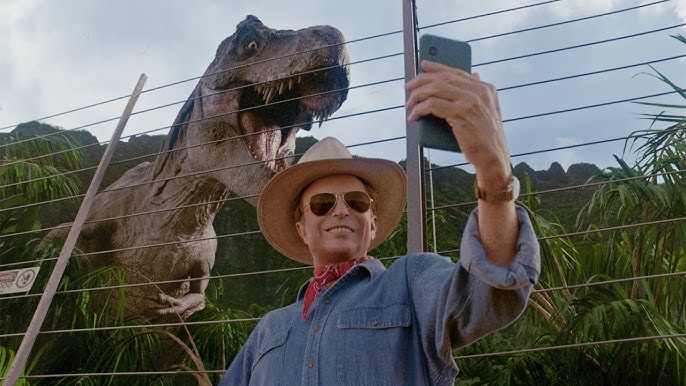
Those spots stood in sharp contrast to Comcast Xfinity’s “Jurassic Park” remake with the original actors in makeup in a mini-reboot of the movie for Xfinity’s Wi-Fi.
Above all, the advertisements that kept the product rather than broad ideas front and center claimed the night, according to Masters.
“Last year there was so much clutter because so many people were trying to make it memorable. The next day, I could not remember which was which. This year, a lot of those ideas were trying to place the product front and center,” she said.
Table of Contents
ToggleWinners:
Instacart
As teased for days before the big game, Benson Boone and Ben Stiller put on a show as a 1980s style scythe-pop band for Instacart. The “band’s” song was simple: “Instacart lets you choose your own bananas.”
That created an ear worm combined with a comedic edge as Stiller’s character tries to outdo Boone with a failed backflip, said Masters.
“Not only does the song have their name, it has the new product offering. What does everyone hate about Instacart? They give you the worst product. Well, not anymore because of this new product. It was a smart way to ingrain the product and idea within one another so you couldn’t forget it,” she said.
Comcast Xfinity
Not only did Masters find it refreshing to see no AI used to “de-age” Sam Neill, Jeff Goldblum and Laura Dern, the Comcast Xfinity ad also packaged its product with nostalgia and humor. With the help of Xfinity’s products, the computer issues that caused Jurassic Park’s security to be disabled can be turned right back on.
That allows Neill take a selfie with roaring dinosaur with glee. Goldblum also took a turn on his character’s iconic phrase of “Life finds a way,” turning it to “Wi-Fi finds a way.”
“It was such a simple idea. Just plug it in and have a wonderful weekend. It was built on nostalgia, as everyone knows Jurassic Park, it’s across generations now,” Masters said. “The product became the hero of the day and so you can’t separate the two. It was very smart.”
Alexa+
While Masters found much of the AI product advertisements uninspired or sometimes unsettling, the one that landed well was for Amazon’s Alexa featuring Chris Hemsworth and his wife Elsa Pataky. After seeing Pataky use Alexa to order a car service, Hemsworth becomes nervous about the device and imagines how it could kill him. Those inventive ways include dropping a garage door on him or closing the pool cover while he’s swimming.
It worked because it built off the public’s distrust for AI models, Masters said.
“It played off that in a funny way and, in the end, it just tried to book him a massage because he was stressed. That worked,” she said.
Losers
Weather Tech’s “TaDa”
From a pure memorability standpoint, Masters felt that WeatherTech failed the assignment. The manufacturer of durable automotive accessories is best known for its line of car mats and trunk liners. This advertisement featured a family trying to fit everything in their car, showing off WeatherTech’s products like a roof basket and a hitch basket.
It is Weather Tech’s 14th time advertising in the Super Bowl, a sign in itself how successful the company is, but Masters said this year’s advertisement got lost against other memorable clips.
“It just felt like a spot you’d see every other day. It was boring. It’s such a waste of an investment because why are you spending this money if you are going to be that forgettable,” Masters said.
Toyota’s “Where Dreams Begin”
The car manufacturer had two spots and, while neither focused on selling a dream of the future, one focused on the past. Athletes like NFL wide receiver Puka Nacua, U.S. Paralympian Okasana Masters and NASCAR driver Bubba Wallace were all seeing training alongside imagined younger versions of themselves.
“It just didn’t hit the emotional note. There was something about it that felt inauthentic to me,” Masters said. “Maybe it was made with AI.”
Anthropic’s “no advertisers” bid
Anthropic chose to market its AI engine Claude by reminding the viewers that it doesn’t have advertising on their platform unlike OpenAI. In the spot, a man is seen struggling to work out and asks AI, shown as a fit man. AI then gives him an advertisement for height-boosting insoles with a smile.
“It was creepy to begin with and so the company wasn’t separating that distrust from their product. In the end, it just reinforced what people think of AI rather than how it stands out,” Masters said.
link